

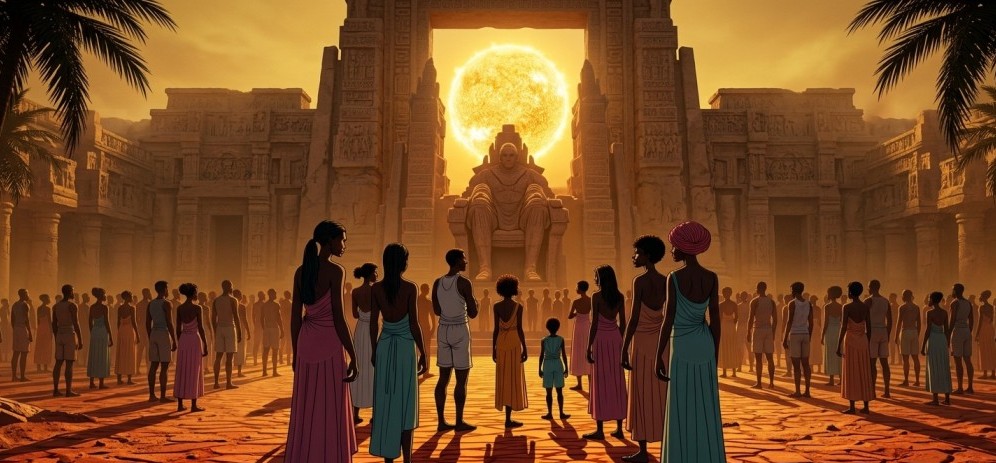
Long ago in Calabar, there ruled a powerful king named Eyamba. He conquered many lands, taking the strong men and young women as slaves while destroying the old. Though he had two hundred wives, not one of them had ever borne him a son. As Eyamba grew older, his people urged him to marry one of the spider’s daughters, for the spider clan was known for having many children.
The king agreed reluctantly, for the spider’s daughter, Adiaha, appeared ugly. People whispered that her mother had birthed so many children at once that their beauty had been divided among them. Still, to satisfy the kingdom, Eyamba married her and built her a separate house because the other wives complained.
But Adiaha was not truly ugly. She had been born with two skins. One was a dull, rough skin she was forbidden to remove except at night. Beneath it, she was radiant. Her mother had sworn that Adiaha must hide her true beauty until the appointed time.
The king’s head wife knew this secret and feared that if Eyamba ever saw Adiaha’s real appearance, he would love her above all others. So she went to a Juju priest and paid him handsomely to create a potion that would make the king forget Adiaha completely. This plan worked. For months the king passed by Adiaha without recognizing her at all.
After four months of being ignored, Adiaha returned to her parents. Her father, the great spider, took her to another Juju man. He quickly discovered the truth: the head wife had bewitched the king. He prepared a remedy to restore the king’s memory, and Adiaha carried it to Eyamba.
The moment the king ate the food she prepared, his memory returned. He recognized her as his wife and called her to visit him that night.
When darkness covered the palace, Adiaha removed her ugly skin. The king saw her true beauty and was delighted. But before dawn, she put the skin back on and returned to her house. This happened night after night.
In time, to everyone’s amazement, she gave birth to a single son. People were shocked, for her mother usually birthed dozens at once. Jealousy filled the head wife’s heart. She returned to the Juju man, demanding stronger medicine—something to turn the king against his own child.
The Juju priest gave her what she wanted. After taking it, the king fell ill and visited the priest, who lied and told him:
Your son seeks your throne. If you want to recover, you must throw him into the river.
The king resisted, but his chiefs persuaded him to obey. At last he lifted the baby boy and cast him into the water. Adiaha wept bitterly.
But the Water Juju, who served Adiaha’s father, was waiting. He caught the child, carried him to his underwater home, and raised him into a strong young man.
For three years the head wife used more medicine to make the king forget Adiaha again. She mourned and returned to her parents. Then once more, the spider obtained medicine that restored the king’s memory. Adiaha returned to the palace, and soon she bore a daughter. Again the jealous wife tricked the king into throwing the child into the river. And again the Water Juju rescued her.
When both children were grown, the Water Juju decided it was time for justice. He encouraged the young men of the kingdom to host wrestling matches every week. The king’s forgotten son, strong as iron and handsome as his father, joined the competitions and defeated every challenger with ease.
People marveled at his resemblance to the king.
A grand contest was arranged, and Eyamba attended with his head wife. The unknown champion won every match. The king invited him to dine at the palace. The head wife, seeing his beauty and strength, fell in love with him immediately, not knowing he was the child she had plotted against.
The boy pretended to welcome her attention, but he knew of her crimes. That night he returned to the Water Juju and told him everything.
The Water Juju said:
Go to the king tomorrow and request a public trial before all people. Ask that whoever is found guilty shall be executed by the Egbos.
The boy obeyed. The king agreed, and messengers were sent throughout the land to gather the people.
On the day of the trial, Adiaha removed her ugly skin for the first time in daylight and appeared in her true beauty. No one recognized her. She sat quietly with her daughter beside her.
The young man stood before the crowd and asked, Am I not worthy to be the son of a chief? The people answered, Yes.
He then presented his sister. Is she not worthy to be a chief’s daughter? Again the people said yes.
Finally, he brought out his mother. When Adiaha stepped into the center, the crowd gasped at her beauty. She seemed as though she could birth a line of mighty kings.
Then the young man told the full story: how Adiaha had married the king, how she had been bewitched, how the head wife had forced the king to throw both his children into the river, and how the Water Juju had saved them.African narrative analysis
Long ago in Calabar, there ruled a powerful king named Eyamba. He conquered many lands, taking the strong men and young women as slaves while destroying the old. Though he had two hundred wives, not one of them had ever borne him a son. As Eyamba grew older, his people urged him to marry one of the spider’s daughters, for the spider clan was known for having many children.
The king agreed reluctantly, for the spider’s daughter, Adiaha, appeared ugly. People whispered that her mother had birthed so many children at once that their beauty had been divided among them. Still, to satisfy the kingdom, Eyamba married her and built her a separate house because the other wives complained.
But Adiaha was not truly ugly. She had been born with two skins. One was a dull, rough skin she was forbidden to remove except at night. Beneath it, she was radiant. Her mother had sworn that Adiaha must hide her true beauty until the appointed time.
The king’s head wife knew this secret and feared that if Eyamba ever saw Adiaha’s real appearance, he would love her above all others. So she went to a Juju priest and paid him handsomely to create a potion that would make the king forget Adiaha completely. This plan worked. For months the king passed by Adiaha without recognizing her at all.
After four months of being ignored, Adiaha returned to her parents. Her father, the great spider, took her to another Juju man. He quickly discovered the truth: the head wife had bewitched the king. He prepared a remedy to restore the king’s memory, and Adiaha carried it to Eyamba.
The moment the king ate the food she prepared, his memory returned. He recognized her as his wife and called her to visit him that night.
When darkness covered the palace, Adiaha removed her ugly skin. The king saw her true beauty and was delighted. But before dawn, she put the skin back on and returned to her house. This happened night after night.
In time, to everyone’s amazement, she gave birth to a single son. People were shocked, for her mother usually birthed dozens at once. Jealousy filled the head wife’s heart. She returned to the Juju man, demanding stronger medicine—something to turn the king against his own child.
The Juju priest gave her what she wanted. After taking it, the king fell ill and visited the priest, who lied and told him:
Your son seeks your throne. If you want to recover, you must throw him into the river.
The king resisted, but his chiefs persuaded him to obey. At last he lifted the baby boy and cast him into the water. Adiaha wept bitterly.
But the Water Juju, who served Adiaha’s father, was waiting. He caught the child, carried him to his underwater home, and raised him into a strong young man.
For three years the head wife used more medicine to make the king forget Adiaha again. She mourned and returned to her parents. Then once more, the spider obtained medicine that restored the king’s memory. Adiaha returned to the palace, and soon she bore a daughter. Again the jealous wife tricked the king into throwing the child into the river. And again the Water Juju rescued her.
When both children were grown, the Water Juju decided it was time for justice. He encouraged the young men of the kingdom to host wrestling matches every week. The king’s forgotten son, strong as iron and handsome as his father, joined the competitions and defeated every challenger with ease.
People marveled at his resemblance to the king.
A grand contest was arranged, and Eyamba attended with his head wife. The unknown champion won every match. The king invited him to dine at the palace. The head wife, seeing his beauty and strength, fell in love with him immediately, not knowing he was the child she had plotted against.
The boy pretended to welcome her attention, but he knew of her crimes. That night he returned to the Water Juju and told him everything.
The Water Juju said:
Go to the king tomorrow and request a public trial before all people. Ask that whoever is found guilty shall be executed by the Egbos.
The boy obeyed. The king agreed, and messengers were sent throughout the land to gather the people.
On the day of the trial, Adiaha removed her ugly skin for the first time in daylight and appeared in her true beauty. No one recognized her. She sat quietly with her daughter beside her.
The young man stood before the crowd and asked, Am I not worthy to be the son of a chief? The people answered, Yes.
He then presented his sister. Is she not worthy to be a chief’s daughter? Again the people said yes.
Finally, he brought out his mother. When Adiaha stepped into the center, the crowd gasped at her beauty. She seemed as though she could birth a line of mighty kings.
Then the young man told the full story: how Adiaha had married the king, how she had been bewitched, how the head wife had forced the king to throw both his children into the river, and how the Water Juju had saved them.African narrative analysis
When he finished he said:
If I lie, let me be killed on the stone. But if the woman is wicked, let her receive the punishment.
Silence fell.
The king rose, trembling. When he realized the wrestler was his son, he embraced him with joy. He ordered the Egbos to seize the head wife. According to their judgment, she was a witch. They tied her to a stake in the forest, whipped her, burned her, and scattered her ashes into the river so she could harm no one again.
The king announced that Adiaha was his rightful queen. She was dressed in fine clothes and carried back to the palace in honor.
A great feast lasted one hundred and sixty-six days. The king made a law that any woman caught using medicine against her husband would be put to death. He built three great compounds—one for his wife, one for his son, and one for his daughter.
They lived in peace for many years until the king died, and his son took the throne.
THE END...
#sudan tales
#folklore
#Hausa Tales
#Egbo Tales
More stories like this
Browse all sudan tales stories
Browse all folklore stories
Browse all Hausa Tales stories
Browse all Egbo Tales stories
Explore the full African folklore library
Popular Folklore
Ananse
Ghanaian Tales
African Tales
Nigerian Folktale
African Stories
folklore
African Folktales
folktales
sudan tales
yuroba tales
Toli
South African folktales
fang tales
Traditional Stories
gabon folklore
Tanzanian folktales
Anansi tales
Ghanaian Stories
tortoise tales
Ewe Tales
Cultural Heritage
akan tales
Congolese folktales
Zulu Tales
Hausa Tales
Fulani Folklore
fairy tales
Mythopia LogoMythopia Home
Where stories come to live
© 2026 Mythopia. All rights reserved.
About Us
Contact
Privacy Policy
Terms of Use
African folklore booksSkip to main content
Mythopia - African folklore and storytelling platform
Search stories...
Home
African Folktales
The Woman with Two Skins
Folktale
The Woman with Two Skins
Konlan Mikpekoah
Nov 25, 2025
6 min read
African folktale illustration – The Woman with Two Skins
Long ago in Calabar, there ruled a powerful king named Eyamba. He conquered many lands, taking the strong men and young women as slaves while destroying the old. Though he had two hundred wives, not one of them had ever borne him a son. As Eyamba grew older, his people urged him to marry one of the spider’s daughters, for the spider clan was known for having many children.
The king agreed reluctantly, for the spider’s daughter, Adiaha, appeared ugly. People whispered that her mother had birthed so many children at once that their beauty had been divided among them. Still, to satisfy the kingdom, Eyamba married her and built her a separate house because the other wives complained.
But Adiaha was not truly ugly. She had been born with two skins. One was a dull, rough skin she was forbidden to remove except at night. Beneath it, she was radiant. Her mother had sworn that Adiaha must hide her true beauty until the appointed time.
The king’s head wife knew this secret and feared that if Eyamba ever saw Adiaha’s real appearance, he would love her above all others. So she went to a Juju priest and paid him handsomely to create a potion that would make the king forget Adiaha completely. This plan worked. For months the king passed by Adiaha without recognizing her at all.
After four months of being ignored, Adiaha returned to her parents. Her father, the great spider, took her to another Juju man. He quickly discovered the truth: the head wife had bewitched the king. He prepared a remedy to restore the king’s memory, and Adiaha carried it to Eyamba.
The moment the king ate the food she prepared, his memory returned. He recognized her as his wife and called her to visit him that night.
When darkness covered the palace, Adiaha removed her ugly skin. The king saw her true beauty and was delighted. But before dawn, she put the skin back on and returned to her house. This happened night after night.
In time, to everyone’s amazement, she gave birth to a single son. People were shocked, for her mother usually birthed dozens at once. Jealousy filled the head wife’s heart. She returned to the Juju man, demanding stronger medicine—something to turn the king against his own child.
The Juju priest gave her what she wanted. After taking it, the king fell ill and visited the priest, who lied and told him:
Your son seeks your throne. If you want to recover, you must throw him into the river.
The king resisted, but his chiefs persuaded him to obey. At last he lifted the baby boy and cast him into the water. Adiaha wept bitterly.
But the Water Juju, who served Adiaha’s father, was waiting. He caught the child, carried him to his underwater home, and raised him into a strong young man.
For three years the head wife used more medicine to make the king forget Adiaha again. She mourned and returned to her parents. Then once more, the spider obtained medicine that restored the king’s memory. Adiaha returned to the palace, and soon she bore a daughter. Again the jealous wife tricked the king into throwing the child into the river. And again the Water Juju rescued her.
When both children were grown, the Water Juju decided it was time for justice. He encouraged the young men of the kingdom to host wrestling matches every week. The king’s forgotten son, strong as iron and handsome as his father, joined the competitions and defeated every challenger with ease.
People marveled at his resemblance to the king.
A grand contest was arranged, and Eyamba attended with his head wife. The unknown champion won every match. The king invited him to dine at the palace. The head wife, seeing his beauty and strength, fell in love with him immediately, not knowing he was the child she had plotted against.
The boy pretended to welcome her attention, but he knew of her crimes. That night he returned to the Water Juju and told him everything.
The Water Juju said:
Go to the king tomorrow and request a public trial before all people. Ask that whoever is found guilty shall be executed by the Egbos.
The boy obeyed. The king agreed, and messengers were sent throughout the land to gather the people.
On the day of the trial, Adiaha removed her ugly skin for the first time in daylight and appeared in her true beauty. No one recognized her. She sat quietly with her daughter beside her.
The young man stood before the crowd and asked, Am I not worthy to be the son of a chief? The people answered, Yes.
He then presented his sister. Is she not worthy to be a chief’s daughter? Again the people said yes.
Finally, he brought out his mother. When Adiaha stepped into the center, the crowd gasped at her beauty. She seemed as though she could birth a line of mighty kings.
Then the young man told the full story: how Adiaha had married the king, how she had been bewitched, how the head wife had forced the king to throw both his children into the river, and how the Water Juju had saved them.African narrative analysis
When he finished he said:
If I lie, let me be killed on the stone. But if the woman is wicked, let her receive the punishment.
Silence fell.
The king rose, trembling. When he realized the wrestler was his son, he embraced him with joy. He ordered the Egbos to seize the head wife. According to their judgment, she was a witch. They tied her to a stake in the forest, whipped her, burned her, and scattered her ashes into the river so she could harm no one again.
The king announced that Adiaha was his rightful queen. She was dressed in fine clothes and carried back to the palace in honor.
A great feast lasted one hundred and sixty-six days. The king made a law that any woman caught using medicine against her husband would be put to death. He built three great compounds—one for his wife, one for his son, and one for his daughter.
They lived in peace for many years until the king died, and his son took the throne.
THE END...